





Sea Otters and Whales (6 hours)
Join Coastal Rainforest Safaris on an unforgettable journey through the wildlife-rich waters, islands, and shores off the northern edge of Vancouver Island.
Extreme birding, title, rights, and occupancy,
species restoration, potlatching, and other cultural things.
Based in Port Hardy on northern Vancouver Island, Coastal Rainforest Safaris offers immersive boat tours for the curious naturalist through Kwakwaka’wakw lands and waters, including Tlatlasikwala and Gwa’sala-‘Nakwaxda’xw First Nations Territories.
Indigenous Tourism BC’s Authentic Indigenous program recognizes Coastal Rainforest Safaris for leading their business with traditional ways of respectful relationship-building, commitment to capacity development, and support for land use and occupancy for local First Nations. Their sharing of unique Indigenous perspectives and their slow approach to tourism demonstrate a commitment to self-discovery through storytelling, learning through curiosity, and wellness for all life in the lands and waters they traverse.
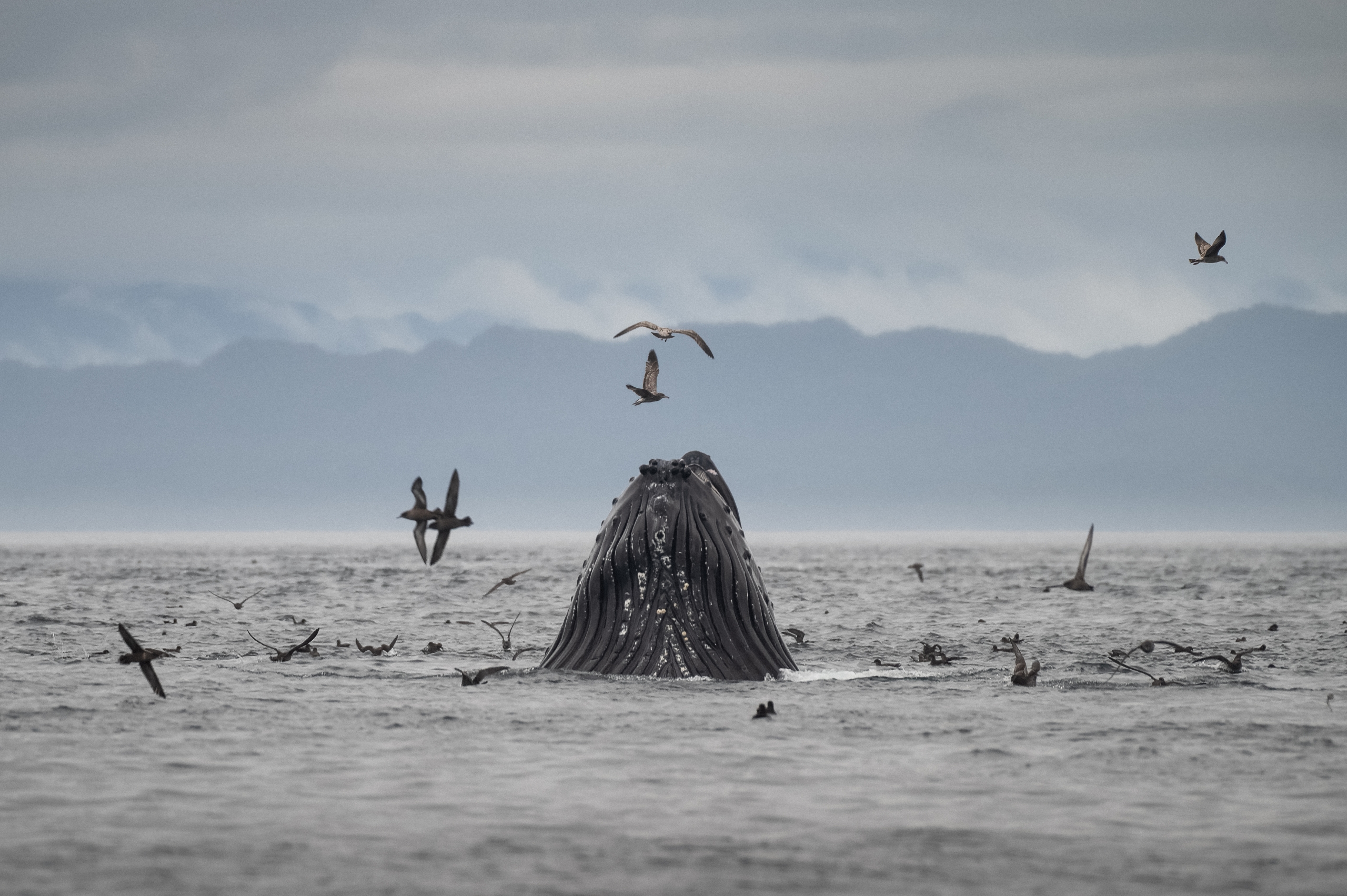
A trip with Coastal Rainforest Safaris is, on the surface, a wildlife experience—boats skimming along dramatic coastlines, moments with whales, sea otters, grizzlies, and the quiet intricacies of the kelp forests.
But for Mike Willie, co-owner of Coastal Rainforest Safaris and a member of the Musgamakw Dzawada‘enuxw First Nations, part of the Kwakwaka’wakw People, and the other guides who lead these tours, something deeper is happening.
Each trip is a way to return to their Territory, strengthen connections, and support community goals around stewardship, culture, and rights. “The better we do, the more into Territory we’re going. We’re now hitting all the nooks and crannies that belong to us,” says Willie.
This is what makes the experience different: it’s honest, unscripted, and shaped by the people who call this place home.
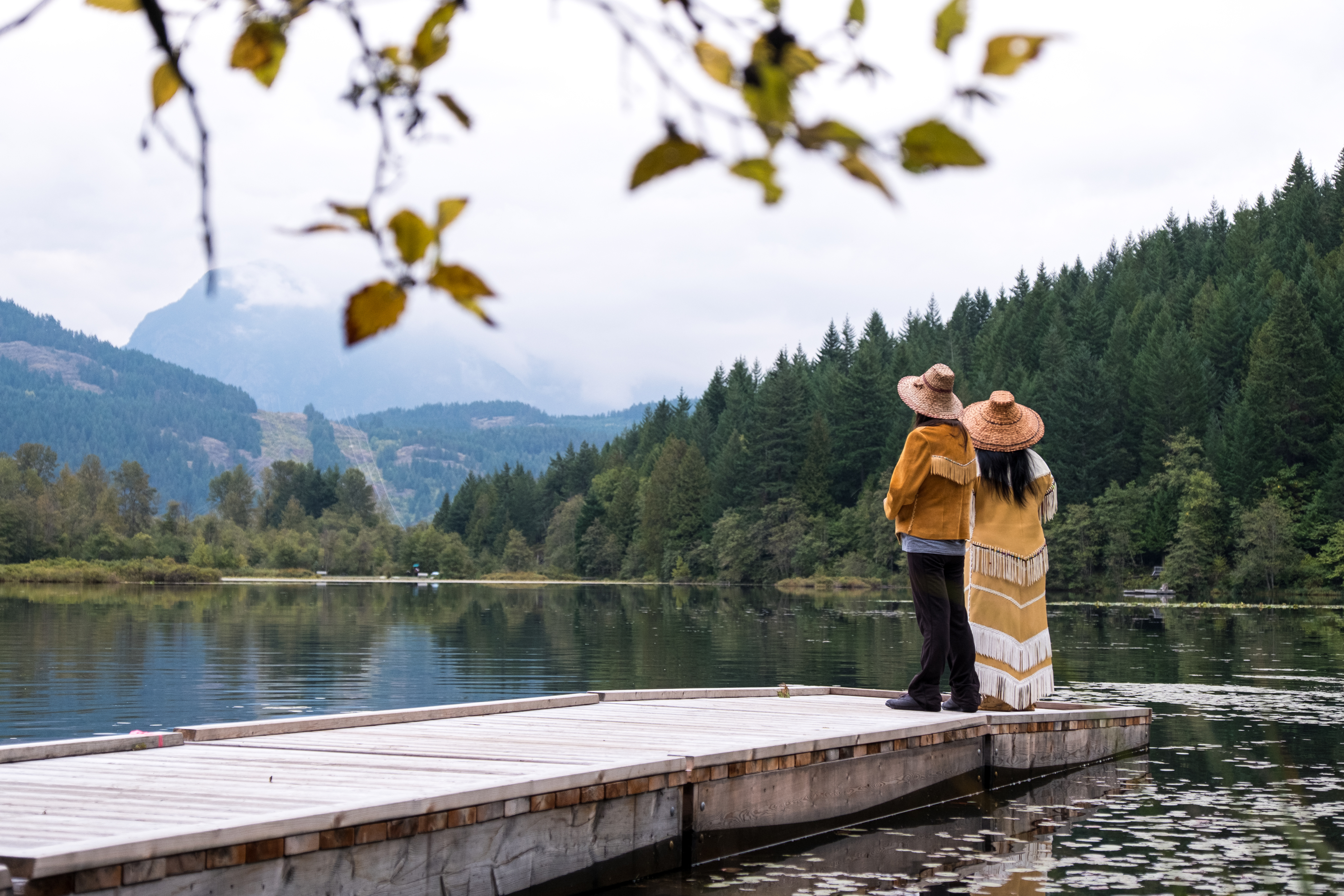
Coastal Rainforest Safaris doesn’t create performative cultural moments. Instead, guides are encouraged to share what feels natural to them: how they grew up, who taught them, which rivers or islands carry family stories, and how they understand the land and waters through lived experience.
Some guides blend science with cultural knowledge. Some speak from memory and tradition. Some are quiet until a guest asks a question that unlocks a story. Mike Willie says, “It’s a cultural thing.”
Remember to ask questions.
You are an active part of your own learning journey.
He tells new and prospective guides, “You make it about you and your upbringing. You can talk about your grandparents or whatever. It’s about you.”
This approach creates tours that feel like genuine once-in-a-lifetime experiences. No two days on the water are the same. They unfold based on the guide, the weather, the wildlife, and the curiosity guests bring.
Coastal Rainforest Safaris is intentional about not promising any specific wildlife sighting—especially orcas.
“If you’re coming here just to see an orca, we’re probably not your best choice,” says co-owner, Andrew. “If they’re around, great. But we don’t sacrifice the overall experience to chase one animal.”
The team moves slowly, both to reduce fuel use and to minimize disturbance to wildlife. Bears are given wide space. Whales are approached with care. Time is intentionally spent in places other operators might pass by: kelp beds, rocky shorelines, quiet bays full of life.
A guest might see a school of young fish sheltering in kelp, eagles circling overhead, sea otters wrapped in fronds, or a grizzly turning stones on a distant beach. These small, grounded moments often become the highlight.
Coastal Rainforest Safaris wants guests to see it all, to have their own personal experience of the true interconnectedness of all life: “We want people to see everything that’s out there—not just the big, iconic things.”
The experience becomes richer when guests participate—asking questions, staying curious, and engaging with what presents itself.
While visitors are experiencing the coast, community members are experiencing a return to the places that shaped their families and Nations.
For some guides, tourism opened doors they didn’t expect. “Tourism showed me what we could do in our own Territories, and create revenue so that this is sustainable,” says Mike Willie.
Reconnection to their lands and waters through work has shifted a sense of self and belonging for some guides at Coastal Rainforest Safaris.“Once they’re running boats, driving boats, riding their waterways, you start to see them say, ‘This is mine. This is where I come from,’” shares Willie.
“This is mine. This is where I come from.”
Coastal Rainforest Safaris works closely with the Nations whose Territories they travel through—through elected leadership, yes, but also through hereditary systems and potlatch relationships that have shaped governance for generations. This approach allows the company to operate in ways that respect community values and strengthen traditional ties.
Tourism also becomes an unexpected form of land use and occupancy—a living expression of rights and title. Of his own experience, understanding of self, land, and community, Mike Willie shares:
“I would never have gone to these places I heard about when I was a child, unless it was to grizzly bear view. And once we head into grizzly territory, now we’re hitting all of these rivers in our Territories.
So it is about occupying. It is about our rights and title. That’s where I come in. That’s what I do is teach people that this is your land. It’s empowering for them.”
The company prioritizes hiring First Nations members from the region and supports them with training and opportunities. For many, guiding becomes not only a job but a reconnection.
Some join as naturalists. Some begin as deckhands. Some arrive with little experience and slowly grow into skilled mariners and storytellers.
A well-loved staff member first joined a Coastal Rainforest Safaris tour while he was working elsewhere and supporting a group of researchers. Mike and Andrew recount his experience on a unique offshore trip—one of Coastal Rainforest Safaris’ rare journeys into deeper pelagic waters. He saw albatross, blue sharks, sperm whales, and even mola mola sunfish. The two co-owners remember him smiling the entire day on the water and commenting, “I didn’t even know these animals existed!”
Now he’s a knowledgeable naturalist and boat operator, known for constant learning—birding, photography, species identification. His growth reflects the company’s broader vision: Building capacity within the Nations so members can see, learn about, and host visitors on their own lands and waters.
This vision is supported by ITBC training programs and by the company’s open-door attitude: even if someone isn’t fully qualified yet, they’re encouraged to start building the skills that will prepare them for future roles in tourism.
Visitors also witness the impact of community-led stewardship efforts. As former fish farms in the region were removed, local Nations began to see remarkable changes: young salmon returning to bays in huge numbers, rivers running black with fish for the first time in decades, and predators reappearing along the food chain.
These moments hit deeply for Willie: “We knew the river would come back, but seeing it… it was emotional.”
This is the kind of learning that happens on the water. Guests may pass abandoned village sites, hear stories about families who moved to keep their children safe during the Residential School era, or learn why certain areas are approached with extra care.
Education isn’t delivered as a lecture—it emerges naturally from the places the boat passes, the questions guests ask, and the guide’s unique life experience and gifts.
It’s not a packaged cultural performance, and it’s not a wildlife chase. It’s something more grounded: a chance to see the coast and all its life as it truly is, through the eyes of the people who belong to it.
Each tour strengthens the presence of local Indigenous Peoples in their waters and on their lands. Each guest becomes part of a story of renewal and return.
And each journey reflects a simple truth: When First Nations are on their lands and waters, culture, stewardship, and community thrive.
Single day Adventures
Join Coastal Rainforest Safaris on an unforgettable journey through the wildlife-rich waters, islands, and shores off the northern edge of Vancouver Island.
This is a special exploratory tour to the water surrounding the undersea canyons off Quatsino Sound, off the west coast of Vancouver Island in search of a myriad of pelagic bird species.
Explore remote islands with Coastal Rainforest Safaris on their Puffin and Seabird tours, off the northern tip of Vancouver Island—traditionally known in Kwak̓wala as Wa̱di and Hiładi—host the highest concentration of breeding seabirds on Canada’s west coast.
Multi-Day Packages
Embark on an extraordinary getaway to Vancouver Island North with Coastal Rainforest Safaris, Sea Wolf Adventures, and Kwa’lilas Hotel. Our exclusive package marries exhilarating wildlife encounters with the comfort of premier accommodations, creating a deeply enriching experience that connects you with the natural world.
This four-day journey takes us through stunning island passages, ancient rainforests, remote inlets, and open ocean, exploring a variety of marine habitats. You’ll search for sea otters, humpback whales, orcas, minke whales, Steller sea lions, and — if you’re fortunate — rarer marine species and terrestrial mammals.
Purchase the gift of adventure for a loved one. Gift certificates can be redeemed for two years after delivery therefore recipients will have plenty of time to plan their unforgettable journey.
Tofino
Vancouver Island
Outdoor Adventure, Authentic Indigenous: Outdoor Adventure, Wildlife, Authentic Indigenous: Wildlife, Bear Viewing
Nanaimo
Vancouver Island
Arts & Culture, Art Galleries & Studios, Authentic Indigenous, Shop, Authentic Indigenous: Shop, Retail
Tofino
Vancouver Island
Stay, Authentic Indigenous: Stay, Hotels & Motels, Lodges & Resorts
Port McNeill
Vancouver Island
Outdoor Adventure, Authentic Indigenous: Outdoor Adventure, Wildlife, Authentic Indigenous: Wildlife, Bear Viewing, Whale Watching
Merritt
Thompson Okanagan
Dine, Authentic Indigenous: Dine, Restaurants & Eateries
Klemtu
Cariboo Chilcotin Coast
Stay, Authentic Indigenous: Stay, Lodges & Resorts
Nemaiah Valley
Cariboo Chilcotin Coast
Stay, Authentic Indigenous: Stay, Lodges & Resorts, Wildlife, Authentic Indigenous: Wildlife
Tofino
Vancouver Island
Outdoor Adventure, Authentic Indigenous: Outdoor Adventure, Hiking & Walking
Kamloops
Thompson Okanagan
Arts & Culture, Heritage Sites
Vancouver
Vancouver Coast & Mountains
Dine, Authentic Indigenous: Dine, Restaurants & Eateries
Tofino
Vancouver Island
Stay, Authentic Indigenous: Stay, Campgrounds, Cabins & RVs
Courtenay
Vancouver Island
Arts & Culture, Art Galleries & Studios, Authentic Indigenous, Shop, Authentic Indigenous: Shop, Retail
Skidegate
Northern BC
Outdoor Adventure, Authentic Indigenous: Outdoor Adventure, Fishing, Wildlife, Authentic Indigenous: Wildlife
Powell River
Vancouver Coast & Mountains
Outdoor Adventure, Authentic Indigenous: Outdoor Adventure, Stay, Authentic Indigenous: Stay, Lodges & Resorts
Campbell River
Vancouver Island
Outdoor Adventure, Authentic Indigenous: Outdoor Adventure, Wildlife, Authentic Indigenous: Wildlife, Whale Watching
Tlell
Northern BC
Stay, Authentic Indigenous: Stay, Lodges & Resorts
Agassiz
Vancouver Coast & Mountains
Stay, Authentic Indigenous: Stay, Hotels & Motels, Lodges & Resorts
Alert Bay
Vancouver Island
Arts & Culture, Authentic Indigenous, Museums & Cultural Centres, Shop, Authentic Indigenous: Shop, Retail
Whistler
Vancouver Coast & Mountains
Arts & Culture, Authentic Indigenous, Museums & Cultural Centres
West Vancouver
Vancouver Coast & Mountains
Outdoor Adventure, Authentic Indigenous: Outdoor Adventure, Hiking & Walking, Paddling
Agassiz
Vancouver Coast & Mountains
Arts & Culture, Art Galleries & Studios, Authentic Indigenous, Shop, Authentic Indigenous: Shop
Osoyoos
Thompson Okanagan
Arts & Culture, Museums & Cultural Centres