




-
INDIGENOUS CARVING AT RUBY CREEK:
Meet Carver George Price
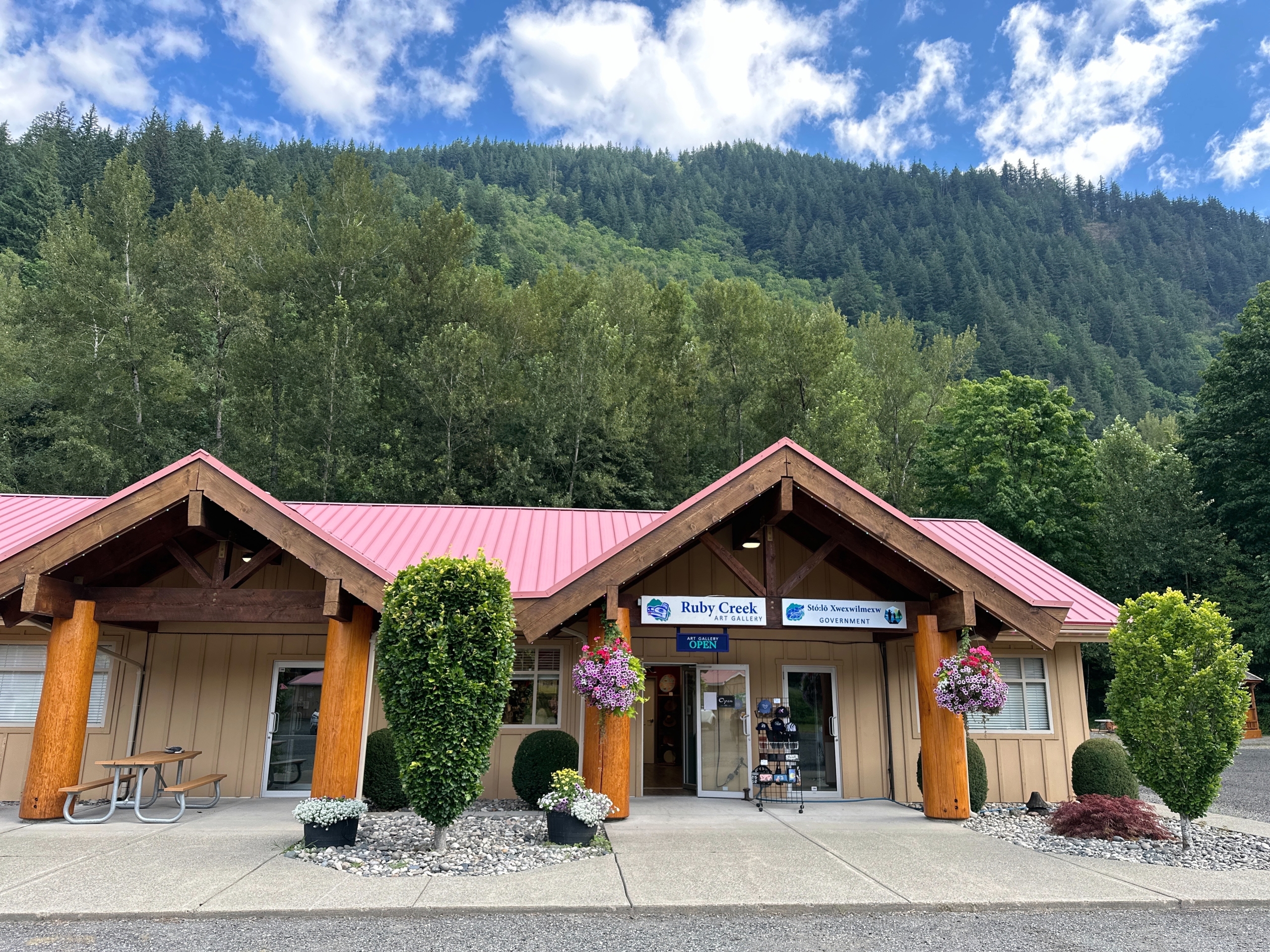
At Ruby Creek Art Gallery, carving is not just something to look at; it is something you experience with all your senses.
Owned and operated by the Sq’ewá:lxw First Nation since 2005, the gallery offers a rare opportunity to witness a master carver at work. Carver Two Running Elk, George Price, has spent more than forty-five years refining his practice, and his current work is a monumental cedar pole created for Sq’ewá:lxw First Nation.
Meet Ruby Creek Carver
George Price
A visit with George at Ruby Creek is a good reminder that culture is alive and well and likes to tell jokes.
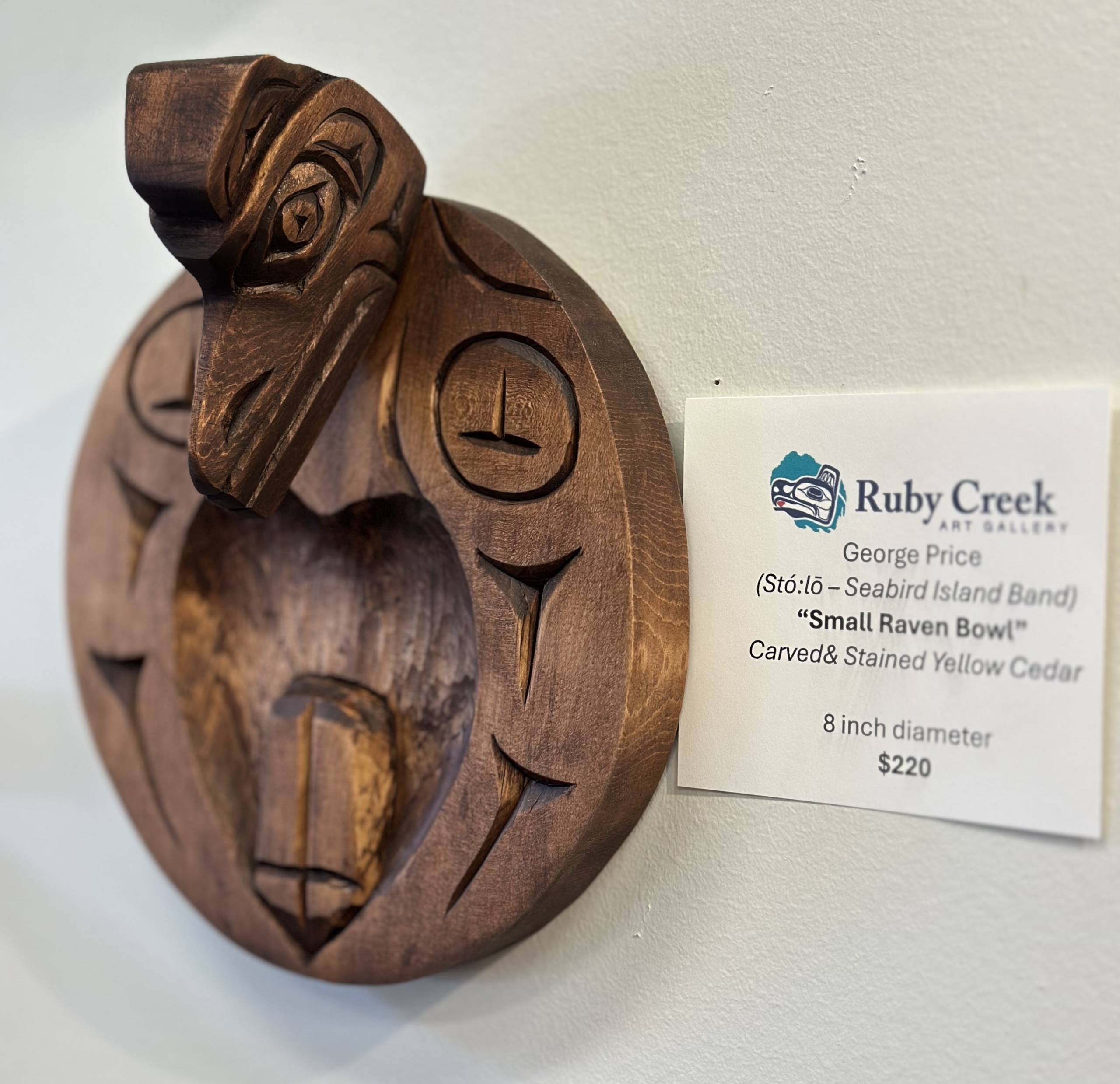
Many people first encounter Indigenous carvings as finished works in galleries or public spaces, standing tall and still, beheld with quiet reverence and unanswered questions about the art and its maker.
At Ruby Creek, visitors can watch wood chips fly or safely learn from and assist master carver George Price over laughs and stories as his hands and life force bring the totem pole to life. Visitors can watch the transformation as the form inside the wood reveals itself, emerges from the log, hear the steady rhythm of tools, and smell fresh cedar curling away in thin ribbons.
It is a rare chance to connect with both the art and the artist in real time.

Stories Carved in Cedar:
Meaning Behind the Figures
Totem poles are visual stories that carry teachings, responsibilities, and connections to place.
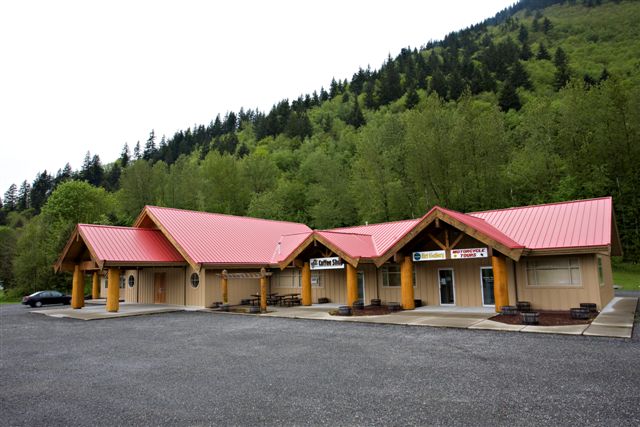
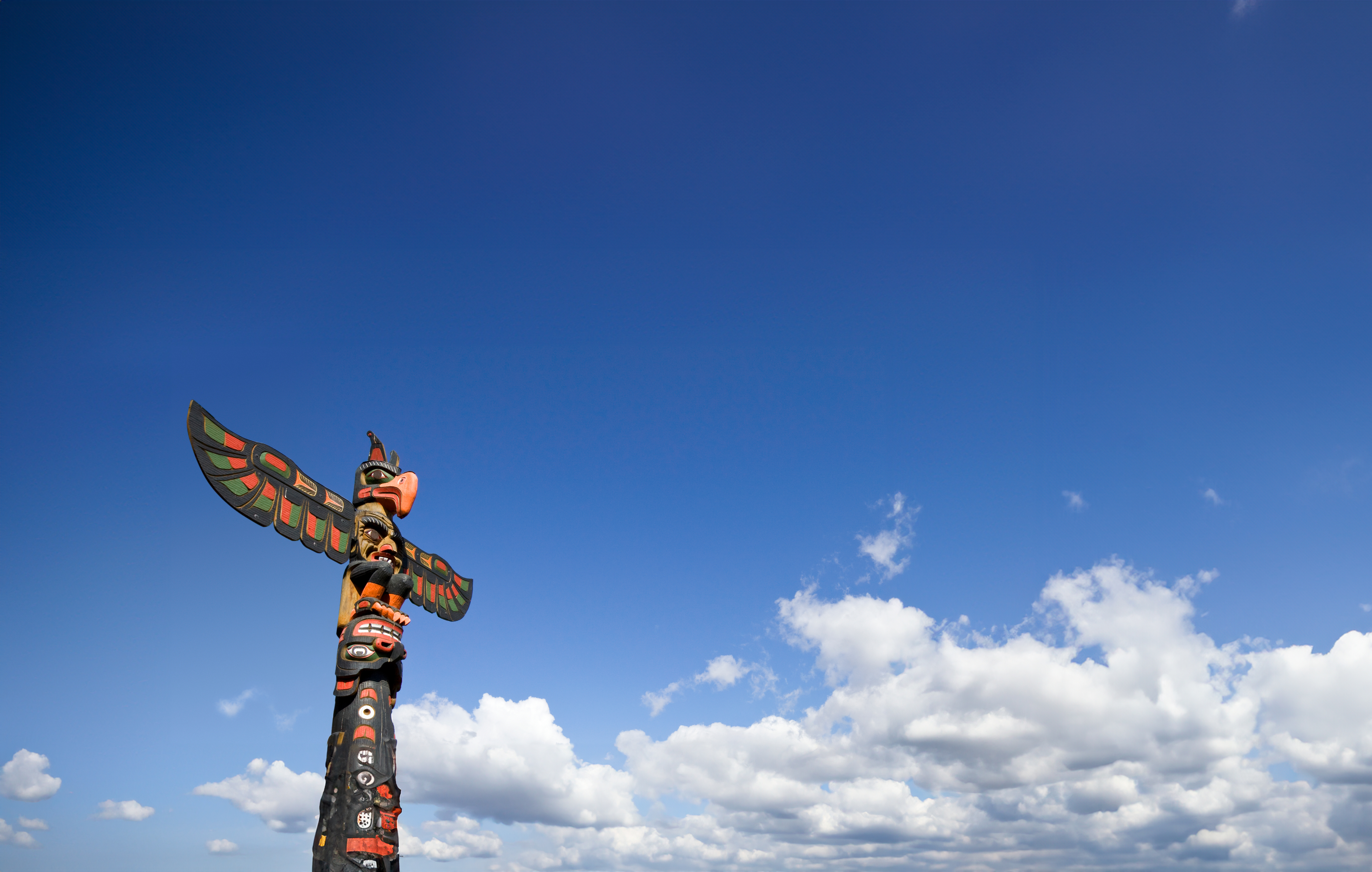
Each figure on this twenty-foot pole reflects the land and culture of the Fraser Valley. The Eagle sits near the top, representing a messenger that carries prayers to the Creator. The bear appears holding a sturgeon, a deliberate choice by the community that reflects the nearby river and its ecosystems.
The Bear is known as a teacher, guiding people in understanding the land, including what can and cannot be gathered or eaten.
Along the mountains near Ruby Creek, a rock formation reveals the profile of a face tilted upward, as if blowing wind across the valley. It is the profile of the Blowing Man, Spópetes, who appears on the pole at Ruby Creek.

T’it’emtámex is a Stó:lō designated landscape feature and transformation site, and translates to T’ámiya’s home. Here, Tamiya was transformed into a rock bluff by Xaxals, the Transformer, with bolts of lightning amid chaos and disorder. The wind is very strong here.
The Watchman is a figure of protection. Positioned to look outward, he watches over the village and the river below. The Fraser River can be powerful and unpredictable, and the Watchman represents care, awareness, and safety for those on the land and water.
“So the Watchman, he looks over the village. He watches the village and makes sure the people are safe, and then he watches them when they’re fishing on the river. It can be really dangerous on the river. Everything we do here, we’re taken care of by the Watchman,” says George.
The Tools and Techniques
Behind Indigenous Carving
Carving at this level requires great skill and a close relationship with tools.
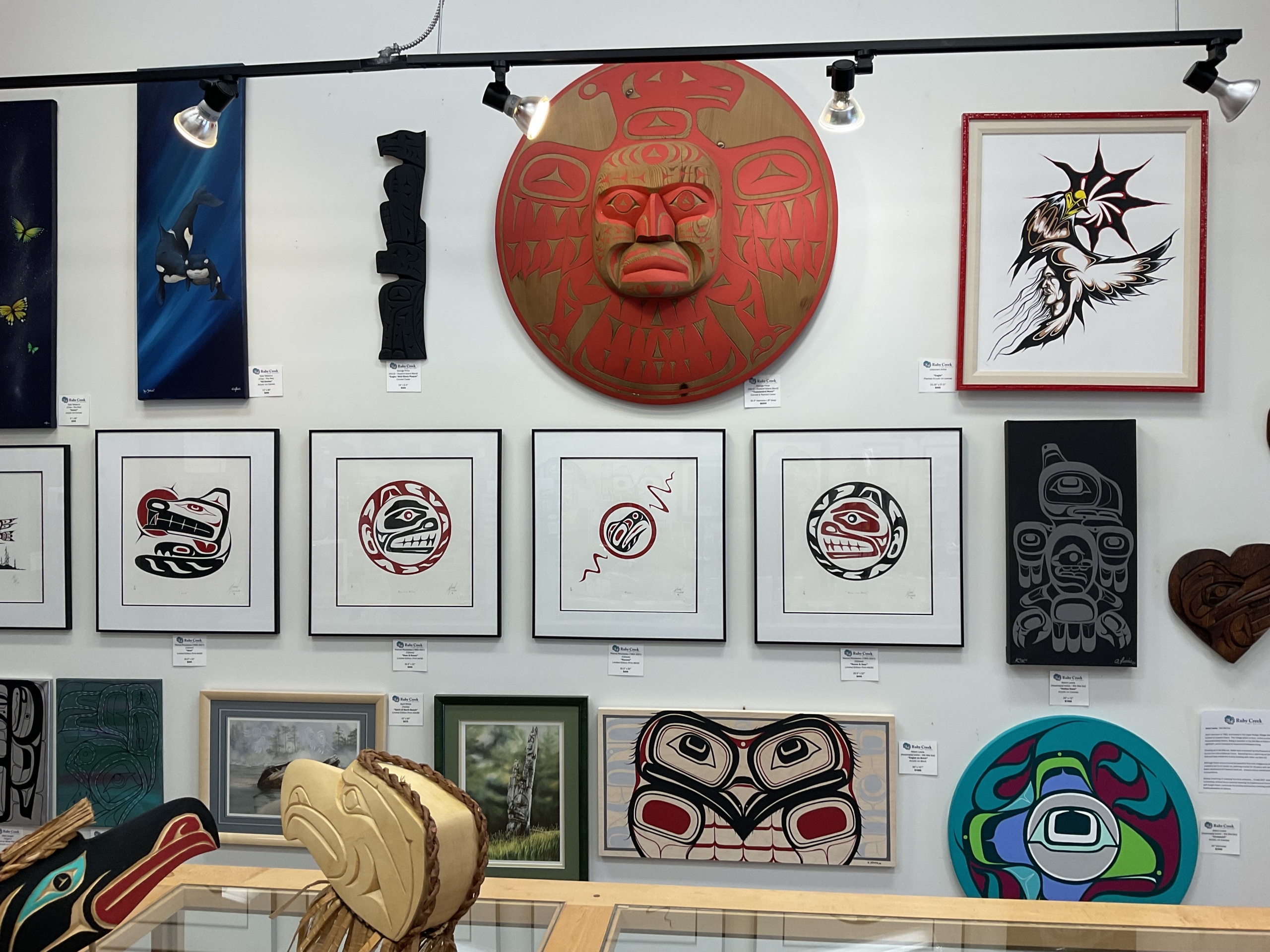
George Price uses adzes to shape the form, chisels to define structure, and a range of knives for detail work. Some tools are created specifically for certain tasks, including a J knife–a knife just for carving nostrils and other fine details.
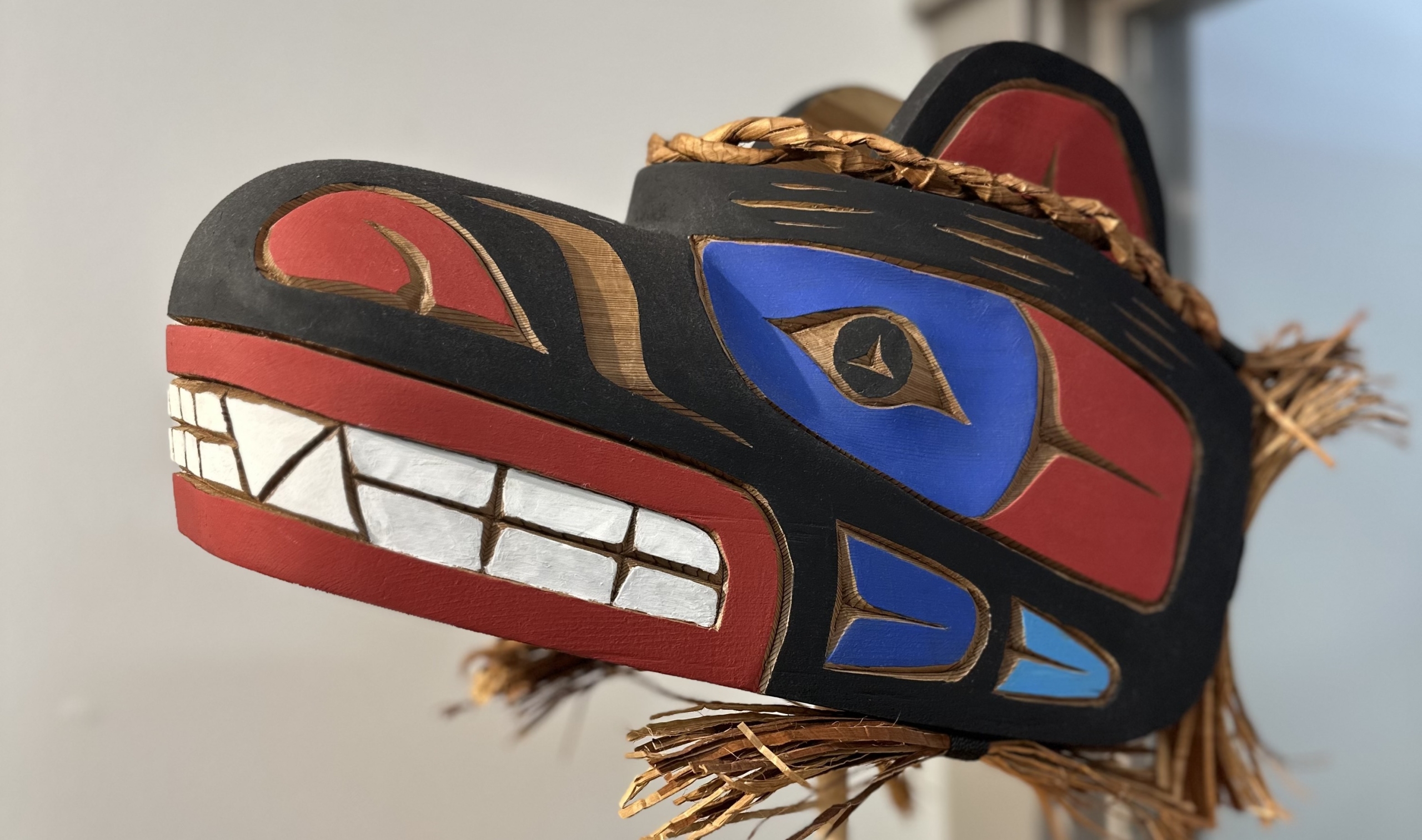
Sharpness is essential. “A dull knife will cut you,” warns George. A well-honed blade allows for precision and control, while a dull edge can slip and cause injury. Each tool is chosen or built to suit the exact need of the moment, reflecting decades of experience and knowledge passed through generations. Over the decades, George has been commissioned to create masks, canoes, house posts, reliefs, doors, podiums, bentwood boxes, and coffins.
The carving of a totem pole can take years, and the process begins with removing large sections of wood and gradually refining the form. It is both technical and intuitive, guided by the carver’s vision and the natural qualities of the cedar itself. It is a relationship.
Cedar and Formline:
A Living Northwest Coast Artform
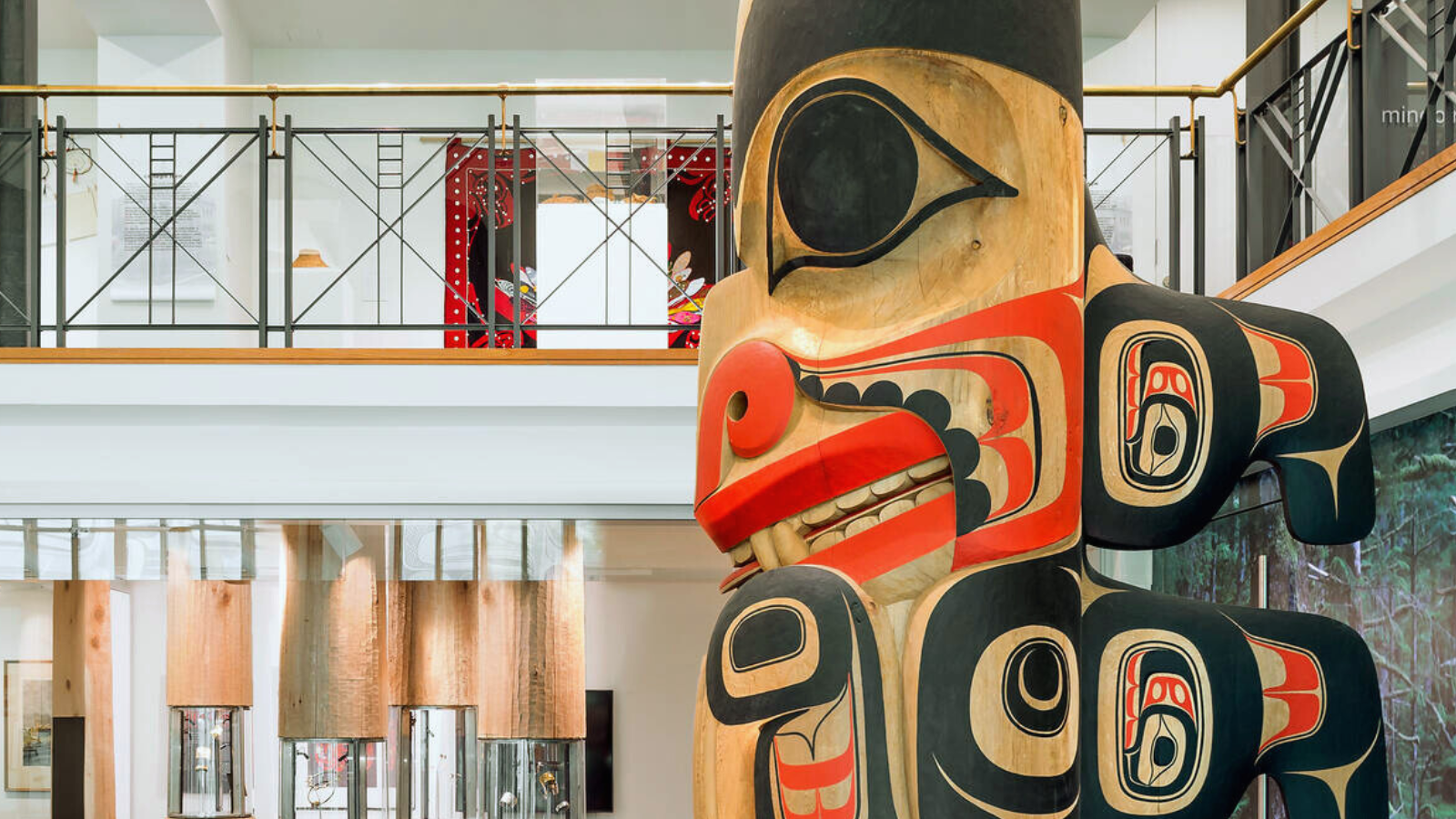
Northwest Coast carving is known worldwide for its bold, flowing visual language. Artists use formline design, shaping figures through ovoids and flowing curves that create movement and balance.
Cedar is central to George’s practice of the Kwakwakawaka and Coast Salish carving styles he was taught. Cedar is strong, workable, and resistant to rot, making it ideal for large outdoor works like poles.
It also carries deep cultural significance, used for generations in homes, canoes, weaving, and ceremony. The log itself plays a role in the final design, with grain, moisture, and natural features influencing how the carving develops.
While cedar is central to his carving, George has worked with a wide array of other woods in his art, including alder, birch, pine, spruce, willow, and ash. To finish or adorn his work, George has used materials such as copper, abalone, opercula, whale bone, and feathers.
The artist uses his own Sxhweli (spirit/life force) to work with, listen to, and respectfully share the Sxhweli of the materials, the community, and the land. It is a great responsibility and a lifetime of learning.
Plan Your Visit to
Ruby Creek and the Fraser Valley
A visit to Ruby Creek is an opportunity to connect with living culture in a meaningful way.
Located along the Fraser River corridor, the gallery sits within a landscape that has supported Stó:lō communities for generations.
Nearby, visitors can explore Syéxw Chó:leqw Adventure Park and walk the Pepó:t Swíyeqe (Blowing Man) Trail to see the mountain formation represented by one of the pole’s figures.
Ruby Creek is an easy stop between Hope and Agassiz, but it is worth giving yourself time to stay. Watching a pole come to life, guided by the hands of an experienced carver, offers a deeper understanding of Indigenous knowledge, art, and connection to place.